In Which Art Movement Do We Categorize the Works of Vincent Van Gogh?
Was Van Gogh inspired by Hokusai's The Great Wave when he painted his Starry Night? The link between these two masterpieces of 19th-century art does not seem to have been made earlier. Merely Vincent was a not bad gentleman of this Japanese print, writing vividly to his blood brother Theo: Hokusai'south "waves are claws, the boat is defenseless in them, you can feel information technology".
In the Hokusai print, the wave towers over the volcanic peak of Mount Fuji, whereas in Van Gogh'south painting the swirling mass in the sky hurtles towards the more gentle slopes of Les Alpilles, the hills which lie merely backside the aviary of Saint-Paul-de-Mausole, where he was then staying. Through the bars of his cell, the Dutchman would frequently expect out towards Les Alpilles and gaze upward into the night sky.
Tumbling across the heart of Van Gogh's sky is the Starry Night painting's almost extraordinary feature—a whorl of flickering brushstrokes that roll beyond the canvas, imparting a potent sensation of movement to the scene. Vincent could well have been thinking of the sea and he had visited the Mediterranean a few weeks before he wrote the letter nearly The Great Wave. The 2 works also share a similar colouring of rich blues.
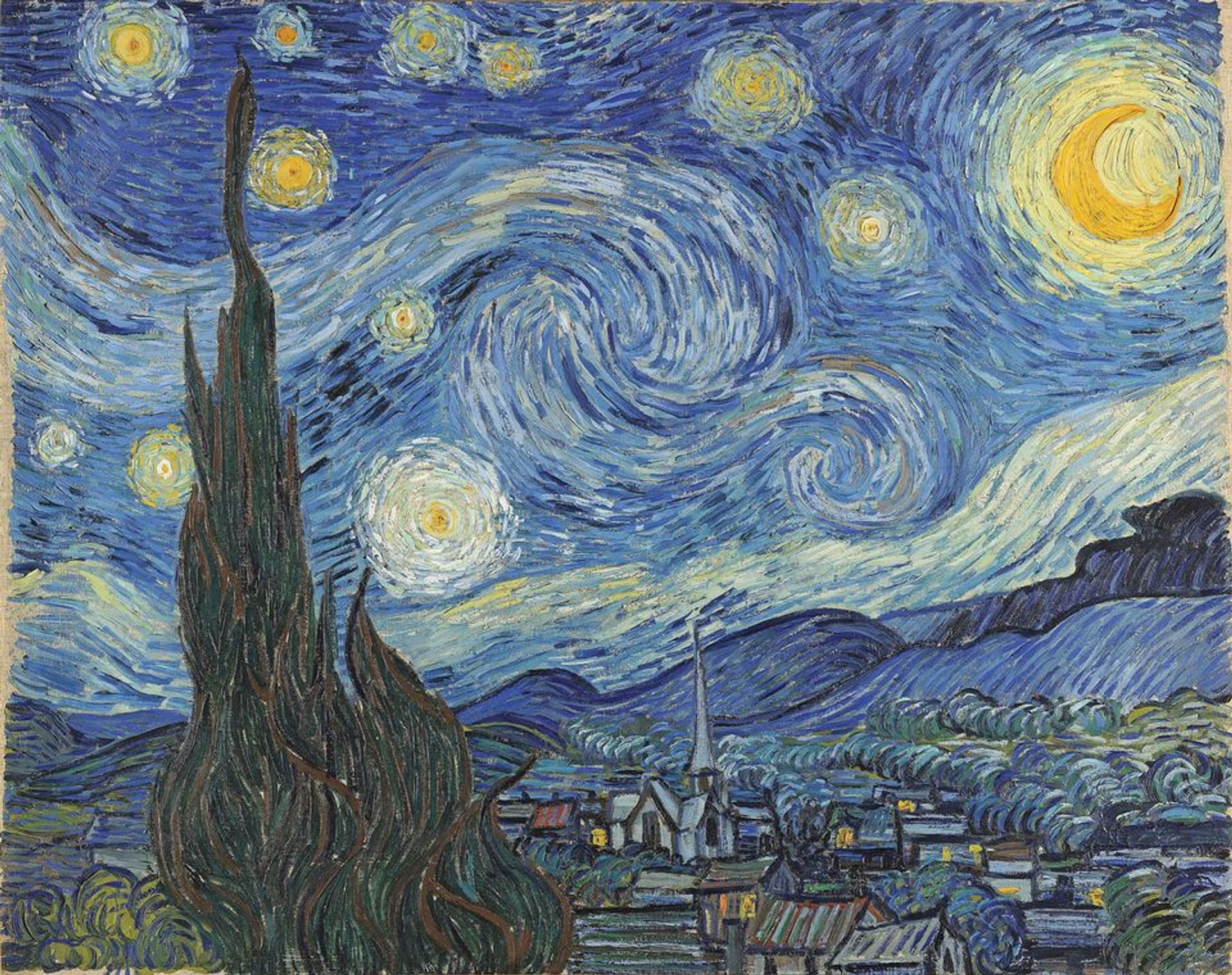
Van Gogh, Starry Night, June 1889, Museum of Mod Art, New York Courtesy of the Museum of Modern Fine art, New York, USA / Bridgeman Images
Van Gogh, I propose, was loosely inspired past The Slap-up Wave and it was in his mind when he painted Starry Nighttime. Of course, Starry Night is a product of the creative person's unbridled imagination, sparked off by the Provençal mural and, most importantly, the hours that he would spend looking up at the heavens. Just it is highly likely that the influences also included The Great Moving ridge, created just over 50 years before on the other side of the globe.
Gentleman
Vincent had written to Theo about The Dandy Wave on viii September 1888, while he was living in the Yellow House in Arles. Although Vincent did not accept a copy of the print with him in Provence, he remembered it well, so information technology must have fabricated a considerable affect when he had seen it some months earlier in Paris. Theo responded to Vincent'due south alphabetic character two weeks later past sending a bundle of Japanese prints, which could well have included The Great Moving ridge.
Although over 500 of Van Gogh's Japanese prints survive today, The Great Wave is not amongst them. However, years later it became i of the well-nigh valuable of all Japanese prints, and then it might have been given away or sold by the artist's family in the first half of the 20th century.
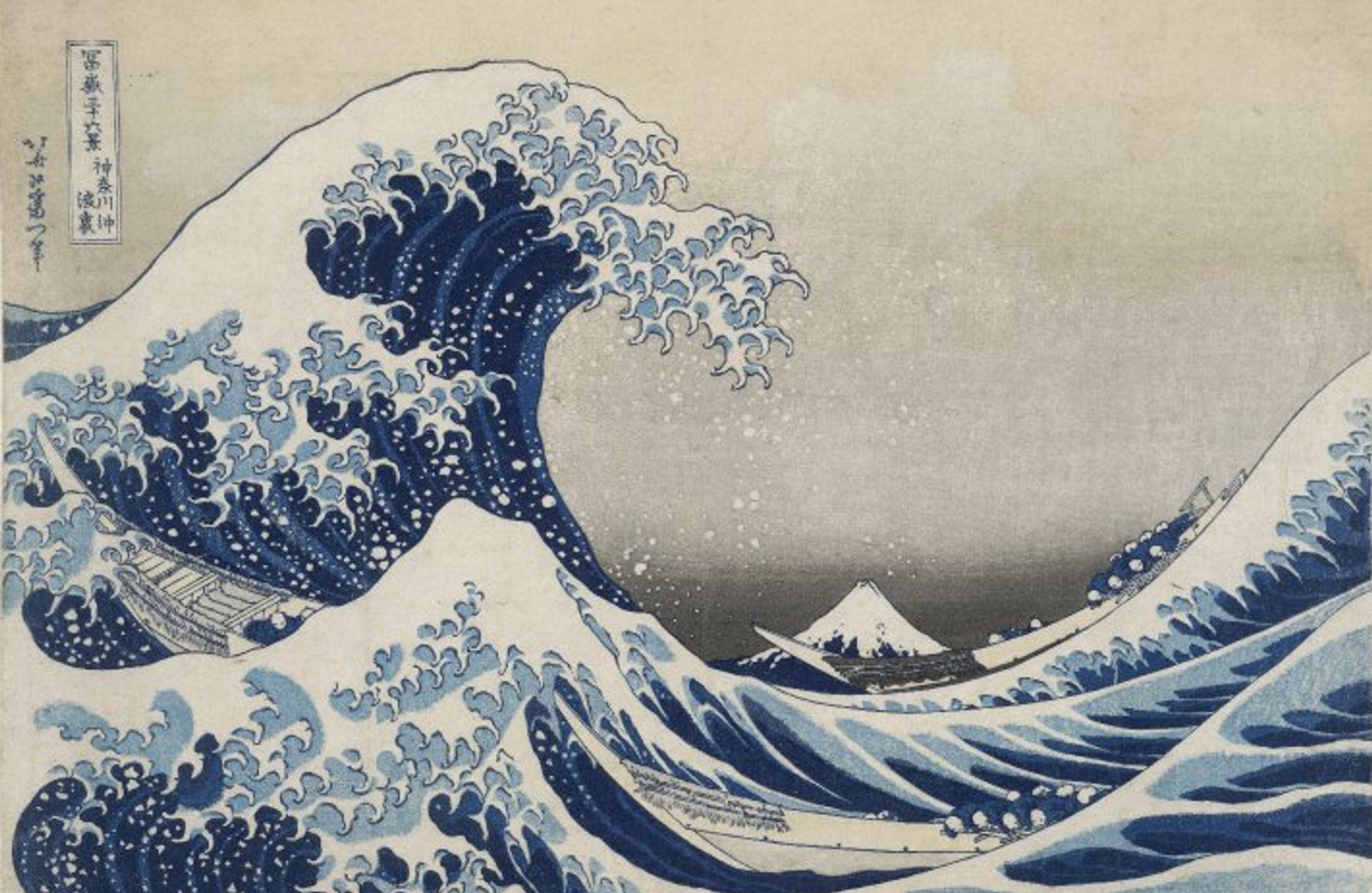
Katsushika Hokusai, The Smashing Wave, near 1831 © the Trustees of the British Museum
Van Gogh, who loved Japanese prints, was among the earliest Modern painters to be recorded as admiring The Great Wave. Both Claude Monet and Henri Rivière both endemic copies (at present at the Fondation Claude Monet in Giverny and the Bibliothèque Nationale de France in Paris), but these artists probably acquired them slightly later, in the 1890s.
Gauguin, who stayed with Van Gogh for two months in the Yellow Firm in the autumn of 1888, likewise loved the piece of work of Hokusai, although he is not recorded as e'er owning or mentioning The Neat Wave. Merely some of Gauguin'south plunging Brittany seascapes of 1888 are highly reminiscent of The Great Wave.
Van Gogh's involvement in The Great Wave is well known to specialists on the artist, but not so widely by experts on Nippon. When Tim Clark was curating final twelvemonth'southward British Museum exhibition on Hokusai: Beyond The Corking Wave, I mentioned Van Gogh's alphabetic character. Every bit a outcome, Clark emblazoned the quote well-nigh the claws on the wall above the museum's superb copy of the print, which was the centrepiece of his highly successful bear witness. Although The Great Moving ridge was beginning to exist appreciated past the avant-garde in Van Gogh's time, it has since get the most famous work of Japanese art.
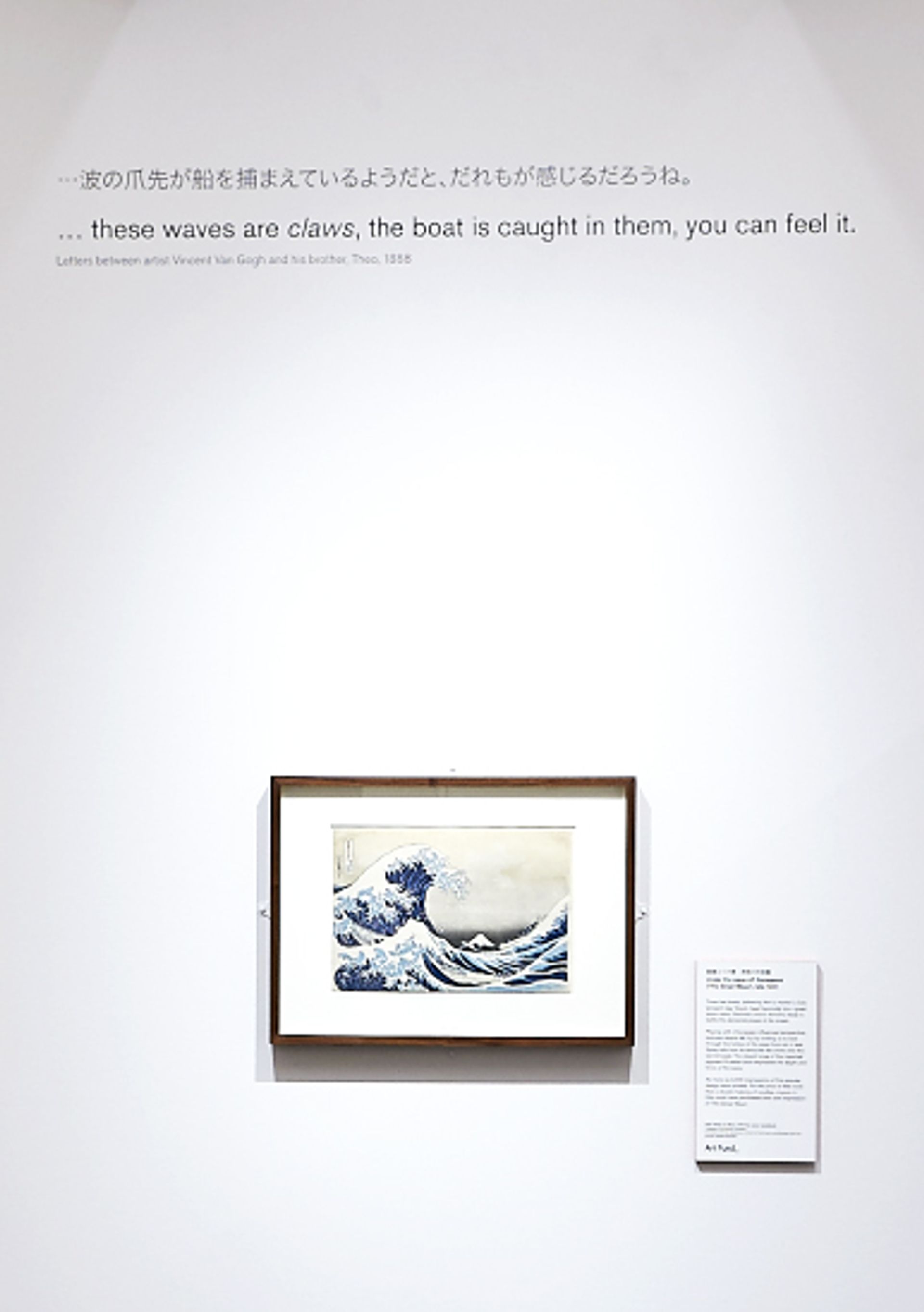
The Peachy Wave, with the Van Gogh quote, at the British Museum'southward Hokusai exhibition, 2017 © Trustees of the British Museum
Source: The Van Gogh quote is from Letter 676 (8 September 1888).
Martin Bailey will be speaking on the Hokusai-Van Gogh link at the Cheltenham Literary Festival on 5 October .
Martin Bailey is the author of Starry Nighttime: Van Gogh at the Aviary, published by White Panthera leo (available through Amazon in the UK and Us ). He is a leading Van Gogh specialist and investigative reporter for The Art Newspaper. Bailey has curated Van Gogh exhibitions at the Barbican Art Gallery and Compton Verney/National Gallery of Scotland; he is now co-curating Tate United kingdom's The EY Exhibition: Van Gogh and Uk, opening in March 2019. He has written a number of other bestselling books, nearly recently The Sunflowers are Mine: The Story of Van Gogh's Masterpiece (Frances Lincoln 2013, available in the UK and Us ) and Studio of the Southward: Van Gogh in Provence (Frances Lincoln 2016, bachelor in the United kingdom and US ).
• To contact Martin Bailey, please email: vangogh@theartnewspaper.com
Read more from Martin's Adventures with Van Gogh blog here.
Source: https://www.theartnewspaper.com/2018/09/28/how-van-goghs-starry-night-was-inspired-by-hokusais-great-wave
0 Response to "In Which Art Movement Do We Categorize the Works of Vincent Van Gogh?"
Post a Comment